Review: 20 Vintage Spooky Halloween Elements
As an embroidery designer who spends more time staring at stitch previews than I care to admit, I have learned that not all design assets are created equal. When I first opened the folder for 20 Vintage, Spooky Halloween Elements, my immediate reaction was one of cautious optimism. The market is flooded with generic holiday clip art, but finding graphics that translate well into thread requires a keen eye for line weight, negative space, and visual balance. This collection promises a vintage aesthetic, which is currently trending heavily in the handmade sector, but does it hold up under the needle?
The Aesthetic First Impression
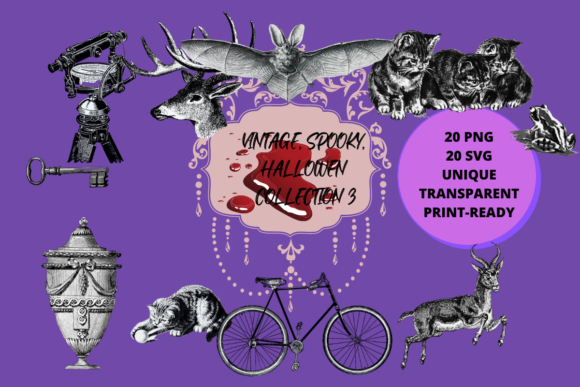
The mood of this collection is distinct. It avoids the neon-bright, cartoonish look that dominates cheap party supplies and leans into a muted, nostalgic eeriness. For an embroidery project, this is crucial. Vintage styles often rely on texture and imperfection, which can be tricky to replicate with machine precision. However, the shapes in these Illustrations appear robust enough to handle conversion into a machine embroidery design. The silhouettes are clear, avoiding the overly fine details that tend to break or bunch up during stitching.
When I visualize these elements on fabric, I see them working best where simplicity meets character. A complex, photo-realistic image often fails in embroidery because threads cannot capture subtle gradients. These vintage elements, with their bold outlines and classic motifs like bats, pumpkins, and antique frames, offer the high contrast needed for a crisp finished product.
Real-World Application: The Custom Tote Test
To truly evaluate usability, I mentally placed these designs into a real-life scenario: a custom order for a local boutique’s October merchandise. The client wanted a tote bag design that felt artisanal rather than mass-produced. I selected one of the central motifs from 20 Vintage, Spooky Halloween Elements to test conceptually.
On a heavy canvas tote, the vintage style shines. The fabric texture of canvas provides a sturdy base that prevents puckering, allowing the fill stitch areas to lay flat. If I were stitching this, I would likely use a matte cotton thread to enhance the retro feel, avoiding the high sheen of polyester rayon which can sometimes look too modern for vintage themes. The result would be a handmade product that feels cohesive and intentional, appealing to customers who value unique, small-batch items over generic store-bought goods.
Versatility Across Products
Beyond totes, this collection offers flexibility for various commercial embroidery applications. Consider sweatshirt embroidery. A oversized crewneck with a small, centered chest motif from this set creates a subtle, stylish look. Because the elements are vintage-inspired, they pair well with the distressed or washed fabrics popular in current apparel trends.
For baby embroidery, caution is key. While some elements might be too spooky for infants, the softer, whimsical icons in the set could work beautifully on neutral-colored onesies or burp cloths, provided the stitch density is adjusted to remain soft against sensitive skin. Similarly, these graphics make excellent candidates for embroidered patch production. Patches require dense stitching and clean edges, and the bold lines in these Graphics support that structural need without becoming a tangled mess of thread.
Where Caution Is Required
No design is universal, and honest reviewing means highlighting limitations. If you plan to use these on stretchy fabric like jersey knits for t-shirts, you must prioritize stabilization. Vintage designs often have open spaces; without proper cut-away stabilizer, the fabric may pull away from the stitches, distorting the image.
Additionally, beware of small hoop size constraints. If you are working with a 4x4 inch hoop, you may need to isolate single elements rather than combining multiple graphics. Trying to cram too many detailed vintage components into a tiny space will result in lost detail and potential needle breaks. Always check the scale. What looks delicate on screen can become a dense, stiff blob if stitched too small.
Technical Considerations for Designers
Before loading any digital embroidery file into your machine, practical due diligence is non-negotiable. Here is how I approach integrating new assets like 20 Vintage, Spooky Halloween Elements into my workflow:
- Test on Scrap Fabric: Never stitch directly on your final garment. Use the same fabric type and weight to check for puckering or thread breaks.
- Check Thread Color Contrast: Vintage palettes often rely on muted tones. Ensure your thread colors provide enough contrast against the fabric background. A dark brown motif on black fabric will vanish.
- Review Stitch Density: If you are digitizing these illustrations yourself, pay attention to the satin stitch widths. Wide satin stitches can snag easily; consider breaking them into smaller segments or using a fill stitch alternative.
- Inspect Small Details: Zoom in on the finest lines. If a detail is thinner than your needle’s width, it will not stitch out correctly. Simplify or remove these elements before production.
- Mockup Testing: Create black and white mockups to verify readability. If the design loses its shape in grayscale, it lacks the necessary contrast for effective embroidery.
Commercial Value and Brand Consistency
For Etsy sellers and craft business owners, the visual appeal of your listing photos drives sales. Using high-quality, cohesive design assets helps build brand recognition. 20 Vintage, Spooky Halloween Elements offers a consistent stylistic thread that allows you to create a unified collection of products. Whether you are selling personalized gift items or custom apparel, consistency signals professionalism.
Customers trust brands that present a clear aesthetic. If your shop features mismatched, clashing styles, it can dilute perceived value. By sticking to a curated set of vintage spooky elements, you create a niche appeal. This specificity attracts buyers looking for that exact vibe, increasing buyer engagement and reducing the likelihood of returns due to "not looking like the picture."
Final Verdict for Makers
In conclusion, 20 Vintage, Spooky Halloween Elements is a strong contender for designers looking to add seasonal flair without sacrificing sophistication. It bridges the gap between digital Illustrations and tangible textile art effectively, provided the user respects the technical limits of embroidery.
Remember, the success of any embroidery project lies in the execution. These graphics provide a solid foundation, but your choice of fabric, stabilizer, and thread will determine the final quality. Always verify licensing terms before selling finished product items or using these in commercial branding. If the license permits commercial use, this collection can be a valuable asset in your holiday inventory, helping you stand out in a crowded market with style and substance.
For those ready to experiment, start with a simple appliance design or a single motif on a tea towel. Master the behavior of the threads on these vintage shapes, and you will find they offer endless possibilities for holiday embroidery that feels both timeless and fresh.