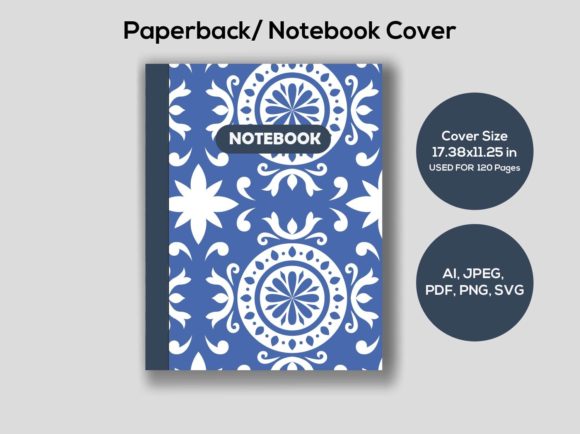
Notebook Cover for KDP: Graphics & Print Templates
As someone who has spent years building a digital product shop, I have learned that the difference between a listing that gathers dust and one that generates consistent passive income often comes down to the quality and versatility of the core graphic design asset. Recently, I acquired a new resource titled Notebook Cover for KDP Interior to evaluate its potential for my upcoming seasonal collection. My goal was not just to admire the aesthetics, but to rigorously test how this digital product performs across various commercial applications, from Etsy listings to print-on-demand merchandise.
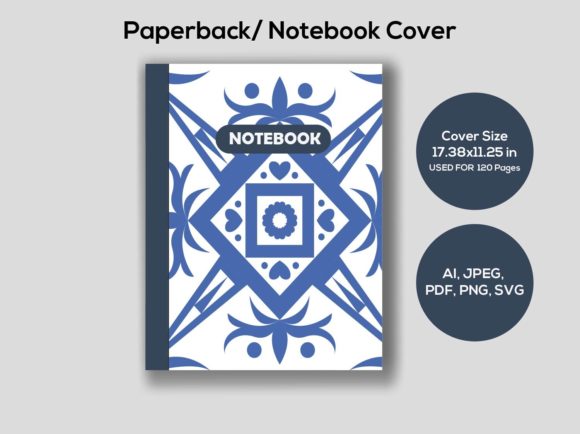
Upon first inspection, the visual personality of this asset struck me as distinctly modern and versatile. It features a minimal vector abstract style that avoids the clutter often seen in lower-quality stock images. The mood is professional yet approachable, making it suitable for a wide demographic. It does not lean too heavily into childish whimsy nor stark corporate rigidity. Instead, it occupies a sweet spot that appeals to students, professionals, and creative entrepreneurs alike. This balance is crucial when creating a printable design intended for broad commercial use. The abstract elements provide enough visual interest to catch the eye in a crowded marketplace without overwhelming the primary function of the item, which is to serve as a functional cover for planners, diaries, and school books.
Real-World Application for Online Sellers
The true value of any design asset lies in its adaptability. I began testing this notebook cover design template by imagining several real-world scenarios for my shop. For sellers on platforms like Creative Fabrica or Etsy, the immediate application is obvious: creating ready-to-use interiors for Kindle Direct Publishing (KDP). However, limiting it to just book covers would be a missed opportunity. I explored how this illustration could be repurposed for other high-demand items.
For instance, the clean lines and balanced composition make it an excellent candidate for a Canva template. By placing the abstract design as a background layer, users can easily overlay their own text for custom brochures or copybooks. I also considered its use in sublimation printing. The vector nature of the file means it scales infinitely without losing quality, which is essential for large format prints like tote bags or tumbler wraps. When adapted slightly, the abstract motifs work well as a sublimation design for mousepads or desk mats, appealing to the work-from-home audience.
Furthermore, for those of us who cater to crafters, this asset can be broken down. Isolating specific abstract elements allows for the creation of unique clipart bundles. These smaller components can be sold separately or used to enhance sticker design sheets. I found that the shapes held up well when tested as part of a Cricut project, provided the paths were cleaned up for smooth cutting. This versatility transforms a single purchase into a multi-product revenue stream, a key strategy for any serious small business branding effort.
Enhancing Product Presentation and Trust
In the world of digital download sales, perception is reality. Customers cannot physically touch the product, so they rely entirely on visual cues. Using a high-quality base like this Notebook Cover for KDP Interior significantly elevates the perceived value of your listings. I created several product mockup previews to see how the design translated into marketing materials. The results were promising. The minimal aesthetic allowed the mockups to look clean and premium, rather than chaotic or amateurish.
Visual hierarchy plays a massive role here. Because the background design is abstract and unobtrusive, it allows typography to shine. This is critical for packaging design or book covers where the title needs to be the focal point. When I paired the asset with various font styles, it demonstrated remarkable flexibility. It complemented bold sans serif fonts for a modern look, elegant script fonts for a feminine touch, and classic serif fonts for an academic feel. This adaptability helps maintain brand consistency across different product lines, whether you are selling social media graphics or physical Print Templates.
Moreover, using such a polished commercial design builds customer trust. When buyers see a cohesive, professional-looking thumbnail, they are more likely to click through and purchase. It signals that the seller cares about quality, which reduces hesitation and can improve conversion rates. This is particularly important in competitive niches like planner stickers or t-shirt design markets, where standing out is challenging.
Strategic Placement and Cautionary Notes
While this asset is robust, it is not a one-size-fits-all solution. Understanding where it works best is key to maximizing its ROI. It excels in large product previews, themed bundles, and decorative layouts where the abstract pattern can breathe. It is ideal for merchandise graphics that require a sophisticated backdrop, such as journal covers, brochure fronts, or mug design wraps. It also serves well in creative marketplace listings as a hero image for a larger design bundle.
However, caution is required in specific contexts. Due to its abstract nature, the design might get lost if scaled down too small. For tiny sticker details or intricate SVG design cuts, the finer lines may not hold up, leading to weeding issues for Cricut or Silhouette users. I recommend avoiding its use in overly complex layouts where it competes with heavy text or other busy graphics. Additionally, always check the contrast. On dark backgrounds, the lighter abstract elements might lack visibility unless adjusted. For print-on-demand products, always verify the color profile to ensure the printed output matches the digital preview, especially for nuanced shades in the vector art.
Practical Seller Checklist
Before publishing any listing featuring this Notebook Cover for KDP Interior, I follow a strict validation process. Here are the practical steps I recommend for fellow creators:
- Test on Real Mockups: Do not rely solely on flat files. Place the design on 3D mockups to see how shadows and curves affect the visual appeal.
- Thumbnail Preview: Shrink the image to thumbnail size. If the abstract details disappear, simplify the layout or increase contrast for better click-through potential.
- Background Checks: Verify how the PNG design looks on both white and dark backgrounds. Ensure transparency is clean if using the PNG version.
- Print Color Verification: Order a physical proof if possible, or use soft-proofing tools to check for color shifts in CMYK conversion.
- File Organization: If reselling as part of a bundle, organize files clearly. Include SVG, PNG, and PDF formats to cater to different user needs, from Cricut projects to standard printing.
- Font Pairing: Experiment with serif, sans serif, script, and display fonts to find the best match for your specific niche.
- License Confirmation: Always double-check the commercial license terms. Ensure you are compliant with platform rules regarding modified vs. unmodified resale.
In conclusion, this Graphics asset offers substantial value for the diligent seller. It is not just a pretty picture; it is a foundational tool for building a diverse range of Print Templates and merchandise. By understanding its strengths in minimalism and abstraction, and respecting its limitations in small-scale detail, you can leverage this notebook cover design to create a professional, cohesive, and profitable product line. Whether you are a seasoned handmade business owner or a new content creator, integrating such high-quality design assets into your workflow is a smart move toward sustainable online success.