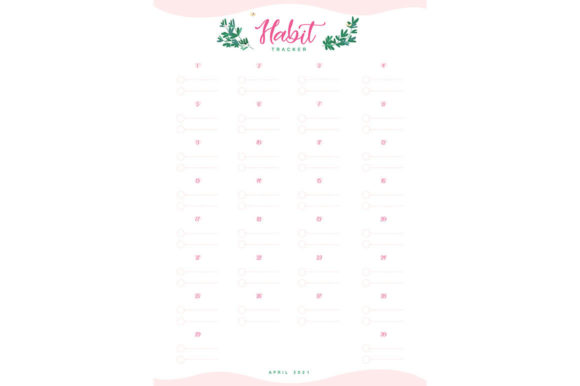
Monthly Habit Track Planner Graphics
As a brand designer who has spent the last decade helping local businesses find their visual voice, I approach every new graphic design asset with a critical eye. It is not just about aesthetics; it is about utility, scalability, and emotional resonance. Recently, I evaluated the Monthly Habit Track Creative Planner for a potential client project involving a boutique wellness studio and a small-batch artisanal coffee roaster. My goal was to determine if this asset could transcend its primary function as a productivity tool and serve as a foundational element for small business branding, product packaging, and promotional material.
First Impressions: Mood and Brand Personality
The first thing that strikes you when opening the Monthly Habit Track Creative Planner is its inherent sense of order mixed with creativity. The design does not scream for attention with aggressive colors or chaotic layouts. Instead, it offers a calm, structured elegance that suggests reliability and mindfulness. For a local business, this mood is invaluable. It communicates that the brand is organized, thoughtful, and customer-centric.
In terms of brand personality, this asset leans towards the friendly yet professional spectrum. It feels handmade but polished, making it an excellent fit for handmade business owners, boutique retailers, and service-based entrepreneurs who want to appear approachable without sacrificing authority. Whether your brand identity is organic, modern, or softly feminine, the clean lines and balanced whitespace of this planner design provide a versatile canvas. It avoids the trap of looking too corporate or too childish, striking a balance that appeals to a broad demographic of conscious consumers.
Strategic Applications in Local Business Design
While the title suggests a focus on school organization or daily routine lists, the versatility of this Illustrations package extends far beyond personal use. In my review, I identified several high-impact applications for real-world commercial design:
- Packaging Inserts and Thank-You Cards: For e-commerce sellers, including a printed version of this habit tracker as a freebie in shipment boxes adds immense perceived value. It transforms a simple transaction into a relationship-building moment.
- Social Media Graphics: The layout is perfect for Instagram carousels or Pinterest pins. Brands can use the structure to share "Monthly Goals" or "Behind-the-Scenes" routines, fostering community engagement.
- Service Menu and Price Lists: For spas, salons, or coaching services, the clean hierarchy of the planner can be adapted to list services, creating a visually appealing menu that is easy to read.
- Product Labels and Stickers: Elements from the Notebook vector template can be isolated to create decorative borders or background patterns for product labels, adding a layer of texture without overwhelming the primary text.
By repurposing the Monthly habit track creative planner page design, businesses can maintain a consistent visual language across touchpoints. This consistency is key to building brand recognition and trust.
Enhancing Business Presentation and Visual Hierarchy
A common mistake in product label and packaging design is clutter. Customers need to process information quickly. The Monthly Habit Track Creative Planner excels in establishing clear visual hierarchy. The distinct sections for tasks, dates, and notes guide the eye naturally. When applied to marketing visuals, such as flyers or posters, this structure helps prioritize information. Important details stand out, while secondary information recedes gracefully.
Using this asset supports better product recognition because it introduces a unique structural element that competitors may lack. Instead of generic backgrounds, your marketing visuals feature a distinctive, curated layout. This leads to a more professional appearance, which directly influences customer trust. In the eyes of the consumer, a well-designed interface implies a well-run business. Whether used in editorial design for a newsletter or as a backdrop for web design elements, the asset elevates the overall polish of the brand presentation.
Where This Asset Shines and Where to Exercise Caution
Through my testing, I found that the Monthly Habit Track Creative Planner works best in contexts that allow for breathing room. It is ideal for:
- Hero Graphics: As a central focal point in social media campaigns or website banners.
- Printable Designs: As a standalone digital product or lead magnet for email list building.
- Seasonal Packaging: Added as a subtle overlay on gift boxes or holiday-themed wraps.
However, there are scenarios where this asset should be used carefully. It is not suitable for formal corporate branding that requires strict minimalism or rigid geometric precision. Additionally, avoid using the full complex layout on very small labels where legibility is compromised. If your product packaging is already crowded with ingredient lists and legal information, adding this decorative element may create visual noise. It is also less effective for luxury minimalist brands that rely on stark emptiness rather than structured decoration. Always ensure that the decoration does not compete with critical text or call-to-action buttons.
Practical Notes for Designers and Brand Owners
Before integrating this graphic design asset into your client work or business branding, consider these practical steps. First, test the design on real product mockup files. See how the lines and text hold up when scaled down for a sticker or expanded for a poster. Check the black and white usage to ensure it remains effective without color, which is crucial for cost-effective printing.
Preview the asset with your specific brand colors. Does the default palette clash, or does it complement your existing identity? Experiment by pairing the layout with different typography styles. It often pairs beautifully with serif fonts for a classic look, sans serif fonts for modernity, or handwritten fonts for a personal touch. If the file includes SVG design or vector components, inspect the editability. Can you easily adjust line weights or remove specific elements? This flexibility is vital for custom packaging design.
Finally, always confirm the commercial license terms. Ensure you have the right to use the Monthly Habit Track Creative Planner for physical product sales, client projects, and digital distribution. Understanding the licensing protects your business and ensures ethical use of creative marketplace resources. By treating this digital product not just as a template, but as a modular component of your broader brand identity, you unlock its full potential for creating memorable, professional, and engaging local business experiences.